REVIEW · RHODES
Private Tour in The Jewish Quarter & Grand Master’s Palace
Book on GetYourGuide →Operated by MBC Travel Rhodes Experts · Bookable on GetYourGuide
Rhodes has another story. This private half-day walks you through La Juderia and medieval Rhodes, then ties it all together at the Grand Master’s Palace area. You’re not just looking at monuments. You’re learning how centuries of Jewish and Knight-era life shaped the Old Town streets you see today.
What I like most is the way the walk turns ordinary corners into meaningful stops, especially around the Alhadeff family sites and the Square of the Martyred Jews. I also love the medieval payoff at the Palace of the Grand Master complex, where the museum setting helps you connect Rhodes to the Knights of St. John. One caution: the palace entry is not included, so you’ll need cash (and you may only see the palace museum if timing works).
In This Review
- Key Things to Know Before You Go
- La Juderia First Steps: Jewish Rhodes in the Narrow Lanes
- Stops You’ll Remember: Alhadeff, the Martyred Square, and the Holocaust Memorial
- Kahal Kadosh Synagogue and the Jewish Museum: Two Anchors, One Thread
- Knights of St. John Context: Why Medieval Rhodes Looks the Way It Does
- Street of the Knights: The Medieval Walk That Makes the City Make Sense
- Grand Master’s Palace Museum: The Ticket Detail That Changes Everything
- Private Group, Real Flexibility: Why Guides Matter on This Route
- Price and Time Management for a 4-Hour Walk
- Who Should Book This Tour (and Who Might Skip It)
- FAQ
- FAQ
- How long is the tour?
- What is the price?
- Is the tour a walking tour?
- What’s included in the tour price?
- Is entry to the Palace of the Grand Master included?
- Where does the tour take place?
- What languages are available?
- Is there free cancellation?
- What should I bring?
- Should You Book This Private Rhodes Tour?
Key Things to Know Before You Go
- La Juderia on foot: Expect narrow lanes, short stops, and a guide who explains why the layout matters.
- Jewish landmarks in a tight route: Alhadeff Park and Street, the Martyred Jews square, and the Holocaust Memorial.
- Synagogue and museum stop: The Kahal Kadosh Synagogue (Greece’s oldest synagogue) and the Jewish Museum of Rhodes.
- Knights of St. John context: You’ll connect sieges and battles to what still stands in Rhodes Old Town.
- Street of the Knights walking time: A focused look at Europe’s best-preserved medieval street.
- Palace entry is extra: Plan for the Grand Master’s Palace ticket at 9€ adult / 5€ reduced, paid with cash.
La Juderia First Steps: Jewish Rhodes in the Narrow Lanes
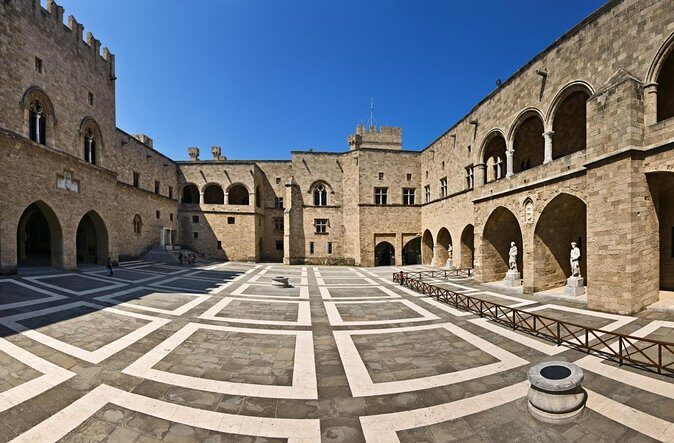
Rhodes Old Town is a UNESCO World Heritage Site, but the Jewish Quarter was what made a huge chunk of the story feel lived-in. Starting in La Juderia, you’ll walk the tight, twisting lanes where it’s easier to understand how communities worked within the walls. The physical setting matters here. The street bends and little courtyards are part of how you picture daily life, not just how you take photos.
The biggest value of the first segment is the pacing. This is not a drive-by tour. You’re moving slowly enough to absorb names, locations, and the cause-and-effect behind them. You’ll hear how the Jewish presence fit into Rhodes over hundreds of years, then you’ll see that history marked in the streets rather than trapped in a single building.
If you’re the kind of traveler who likes meaning behind monuments, you’ll feel in good hands. If you want only grand vistas and minimal walking, this might feel like too many stops. But for most people, it’s the right mix: thoughtful, local, and very Rhodes.
More Private & Full-Island Tours in Rhodes


Stops You’ll Remember: Alhadeff, the Martyred Square, and the Holocaust Memorial
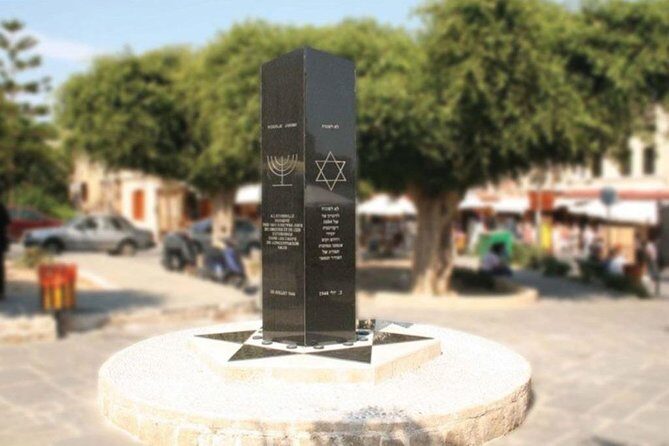
After you get your bearings in La Juderia, the tour points you toward specific places that carry names and memory. The Alhadeff connections are a good example. You’ll walk past Alhadeff Park and Alhadeff Street, both named for a prominent Jewish family. It’s one of those details that helps you move from general history to real community identity.
Then comes the Square of the Martyred Jews and its seahorse fountain. It’s a small but powerful stop. The symbol and the setting help you understand how public remembrance exists in everyday Old Town space, not only in formal museums.
Right nearby, you’ll also visit the Holocaust Memorial. This is where a good guide can make the difference between seeing a marker and understanding why it’s placed where it is. You’ll get context on what you’re looking at and why Rhodes holds these layers in public view.
One practical note: these stops are outdoors, so come prepared for sun and heat. Comfortable shoes are not optional on this one, because the tour is built around walking between clusters of sites.
Kahal Kadosh Synagogue and the Jewish Museum: Two Anchors, One Thread
The highlight for many people is the combination of a living landmark and a dedicated museum. You’ll visit the Kahal Kadosh Synagogue, described as the oldest synagogue in Greece, and then you’ll head to the Jewish Museum of Rhodes.
Why this combo works: a synagogue gives you the spiritual and community anchor, while a museum tends to give you the timeline and artifacts that make the big picture stick. Together, they help you answer the question you might not realize you have: what did Jewish life look like beyond the names on plaques?
Also, the way the guide connects these stops matters. You’re not just collecting facts. You’re building a mental map. The synagogue stop makes La Juderia feel less like a district label and more like a place with routines, traditions, and community structure. The museum then fills in gaps you’d miss if you only relied on what you can infer from the street layout.
If you’re sensitive to heavy themes, note that the tour includes both remembrance and Holocaust context. It’s handled as part of the itinerary, so you’ll want to keep an emotional pace that feels right for you.
Knights of St. John Context: Why Medieval Rhodes Looks the Way It Does
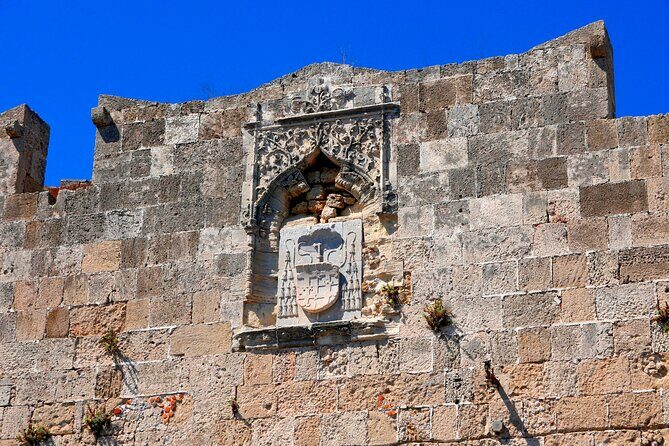
After the Jewish Quarter segment, the tour shifts into medieval Rhodes—and it doesn’t do it randomly. Your guide will explain how battles and sieges fought by the Knights of St. John helped shape the town you see today.
This is one of the reasons I like this tour format. You leave La Juderia with a sense of community life, and then you pivot to the military and political forces that governed the city’s defensive design. The story stays connected instead of feeling like two separate tours stitched together.
You’ll also get a clearer sense of why Rhodes Old Town is so visually “knightly.” The stonework, the streets, and the famous monuments aren’t just pretty backdrops. They’re the leftover framework of power and protection.
One thing to watch: this is still a walking tour. The medieval segment is less about museum doors and more about reading the city. If you prefer a slower, seating-heavy format, you might feel the pace. But if you like walking and learning street-level context, this part is where everything starts clicking.
Street of the Knights: The Medieval Walk That Makes the City Make Sense
Next up is the Street of the Knights, often described as the best-preserved medieval street in Europe. Even if you’ve seen it in photos, it hits differently when you have context for what you’re looking at.
This is where your guide’s timing matters. In a well-run walking tour, you don’t rush past the street’s defining features. You pause long enough to see the rhythm of the buildings and understand how the Knights’ presence translated into architecture and street life.
What I like here is that you’re walking through the medieval “spine” of Rhodes Old Town. Once you recognize that street as the centerpiece, you’ll start noticing how other sights relate back to it. That makes your free time later more enjoyable, because you’re not just following a list—you’re navigating a story.
Other private tours in Rhodes





Grand Master’s Palace Museum: The Ticket Detail That Changes Everything
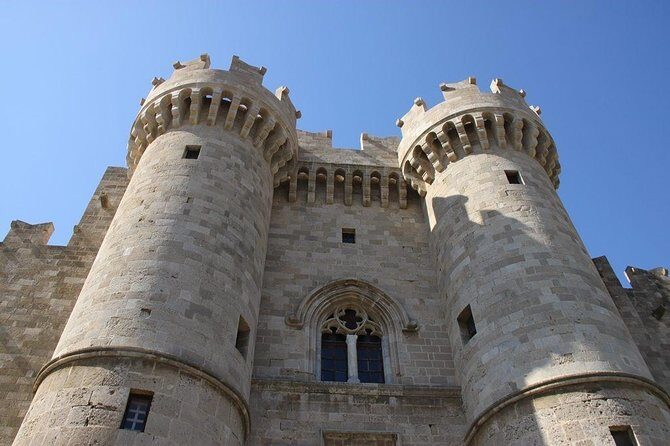
The finish is the Palace of the Grand Master, a 14th-century complex once home to the leader of the Knights of St. John of Rhodes. Today, it’s a museum setting with medieval furniture, elaborate mosaics, and archaeological exhibits from Rhodes.
Here’s the key practical detail: entry to the Grand Master’s Palace is not included. The ticket is 9€ for adults and 5€ reduced, and you need to bring cash. That’s not a small thing. If you show up expecting the museum to be included automatically, you can end up stuck at the threshold.
So treat the palace stop like a two-part plan:
1) Make sure you’re good with the walking duration to reach it.
2) Have your cash ready so you can go inside and actually get the museum value.
In terms of payoff, the palace is a strong end cap because it shifts you from “explaining” to “seeing.” Earlier stops teach you the why. The museum helps you picture the physical world of medieval Rhodes.
If you want the best possible experience, plan for sun, carry water, and don’t assume you can buy or pay instantly if you’re short on cash. This one detail can decide whether you get the full closing scene.
Private Group, Real Flexibility: Why Guides Matter on This Route
This is a private group tour with a licensed guide, and that matters more than you might think on a walk like this. Rhodes Old Town is full of stops that can feel disconnected if you’re only half-listening. A private format keeps the route coherent, and it gives your guide room to adjust when your group needs a slower pace or a clearer explanation.
It also comes in multiple languages (Spanish, Dutch, English, French, German, Italian), which is a big plus if you’re traveling with mixed language needs inside your own group.
One theme that shows up strongly with guides on this route is flexibility with real people. Guides including Nikos, Ioonna, Dimitri, and Izzy have been specifically praised for being accommodating and for adding extra context that turns landmarks into understanding. In other words, you’re not stuck with a script that never breathes.
If you’re celebrating something, traveling with older relatives, or you just hate feeling rushed, a private guide is usually a smart call. If you like big group energy and you don’t care much about explanations, you could choose cheaper group options. But for this specific mix of Jewish heritage + medieval landmarks, the guide’s ability to connect the dots is a big part of the value.
Price and Time Management for a 4-Hour Walk
At $436 per group (up to 4 people) for a 4-hour experience, this sits in the “private tour” bracket. The math works best when you’re filling the group. If you have 4 people, it effectively becomes about $109 per person. If you’re traveling solo or as a couple, you’re paying more per seat, but you’re buying the benefits of a private walk and a guide tuned to your group.
Now the time reality. This is a half-day. That means:
- You’ll spend time on key stops, not on endless branching side streets.
- The route is built to include both the Jewish Quarter and the medieval core.
- You need to keep your pace steady to get the full sequence, including the palace.
One caution pulled from real-world experience: some groups find the tour timing shorter than expected, and in at least one case the palace was only seen from the outside rather than entered. You can reduce the odds of that disappointment by arriving on time, having cash ready, and keeping your own schedule clean. When you’re on a tight walking route, one late start can steal minutes from the finale.
If you’re the type who wants maximum museum time and sits-down breaks, you might consider pairing this with another shorter add-on afterward instead of trying to stack multiple long activities.
Who Should Book This Tour (and Who Might Skip It)
This tour is a great fit if you:
- Want Rhodes Old Town to feel meaningful, not just scenic.
- Care about the Jewish heritage of the island and want it explained where it happened, in La Juderia.
- Like medieval context, especially the Knights of St. John and the way power shaped city streets.
- Prefer a private guide who can adjust pacing and add helpful details.
You might skip or modify if:
- You dislike walking and standing between multiple sites in a single half-day.
- You want museums only, with minimal outdoor memorial and street stops.
- You’re likely to forget cash for the Grand Master’s Palace ticket. This isn’t a “later we’ll figure it out” moment.
If you do book it, I’d plan your day around it. Start early or give yourself breathing room afterward. With the palace museum as the finale, you’ll want your energy for the final push.
FAQ
FAQ
How long is the tour?
It lasts about 4 hours.
What is the price?
The tour costs $436 per group for up to 4 people.
Is the tour a walking tour?
Yes. It includes walking tours of both the Jewish Quarter and the Medieval Town.
What’s included in the tour price?
You get a licensed tour guide, a walking tour of the Jewish Quarter, and a walking tour of the Medieval Town.
Is entry to the Palace of the Grand Master included?
No. Entry tickets are not included. The cost is 9€ for adults and 5€ for reduced tickets, and you need cash.
Where does the tour take place?
It takes place in Rhodes Old Town, within the UNESCO-listed medieval city area, including La Juderia and the Grand Master’s Palace area.
What languages are available?
The live guide is available in Spanish, Dutch, English, French, German, and Italian.
Is there free cancellation?
Yes. You can cancel up to 24 hours in advance for a full refund.
What should I bring?
Comfortable walking shoes, sunscreen and a hat are recommended, and you should bring cash for the Grand Master’s Palace entry ticket.
Should You Book This Private Rhodes Tour?
If you want a Rhodes Old Town visit that connects La Juderia, memorial sites, and medieval Knights-era street life into one clear storyline, this is a strong choice. The private format helps a lot, and the stop at the Kahal Kadosh Synagogue and Jewish Museum gives you anchors that most self-guided walks miss.
The only thing I’d really plan carefully is the Grand Master’s Palace ticket. Bring cash, arrive ready to walk, and keep your schedule flexible so the final museum visit doesn’t get squeezed. Do that, and you’ll leave Rhodes with more than photos, you’ll have a better map of what the city meant to different communities over time.